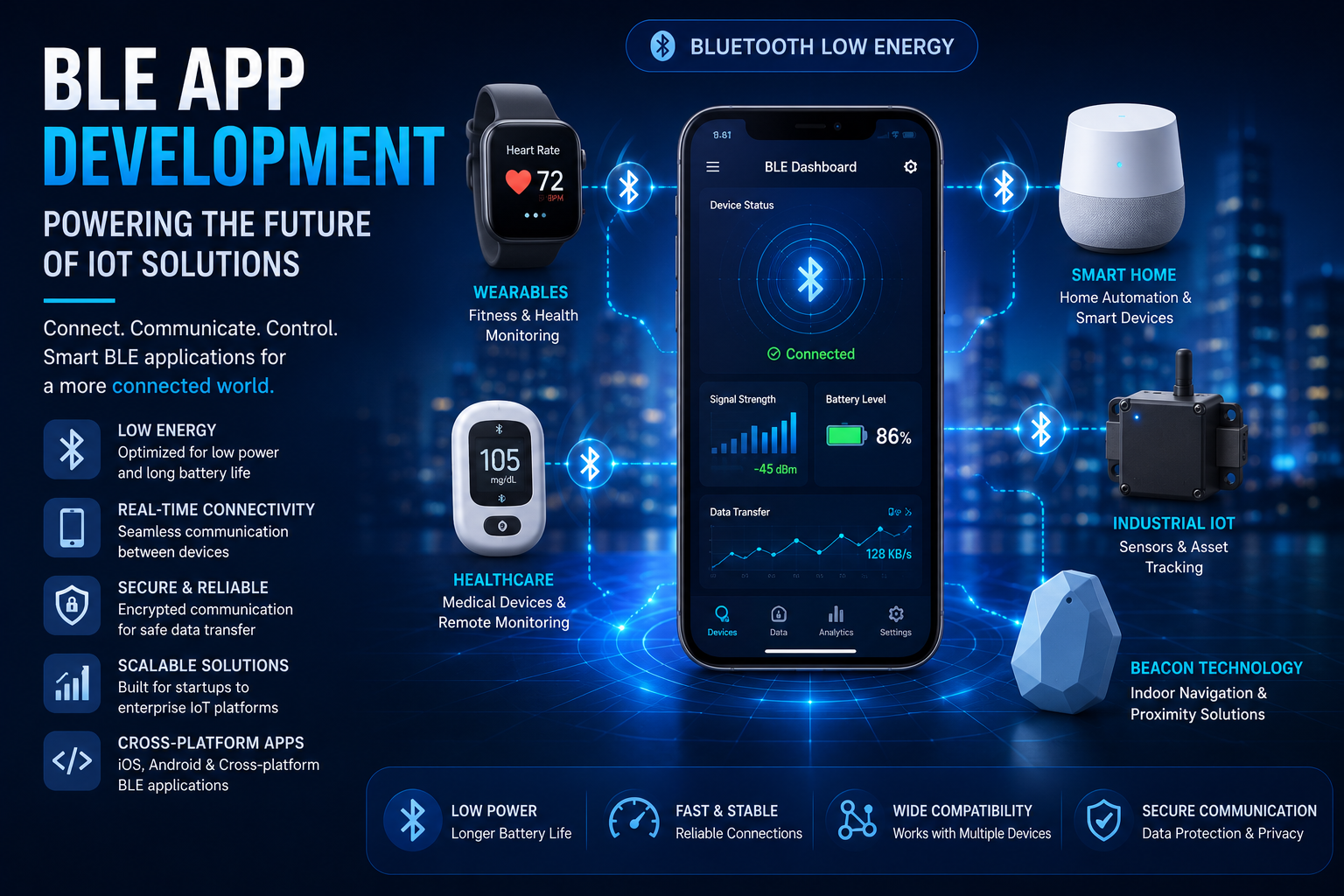
Bluetooth Low Energy (BLE) technology has become one of the most important communication technologies powering modern IoT applications. From smart healthcare devices and wearable technology to industrial sensors and smart home solutions, BLE enables seamless wireless connectivity with low power consumption.
In 2026, businesses are increasingly investing in BLE-powered applications to connect devices, collect real-time data, and deliver smarter digital experiences.
BLEAppDevelopers helps businesses build advanced Bluetooth Low Energy applications that connect mobile devices, sensors, and smart hardware through secure and reliable communication solutions.
What Is BLE App Development?
BLE app development focuses on creating mobile and web applications that communicate with Bluetooth Low Energy-enabled devices.
Unlike traditional Bluetooth technology, BLE is designed for:
- Low power consumption
- Continuous device communication
- Faster data exchange
- Longer battery life
- Cost-effective IoT solutions
BLE applications allow smartphones and tablets to interact with smart devices without requiring internet connectivity.
Why Businesses Are Choosing BLE Technology in 2026
1. Growing Demand for IoT Connected Devices
The Internet of Things ecosystem is expanding rapidly.
Businesses are using BLE technology for:
- Smart wearables
- Healthcare monitoring devices
- Industrial sensors
- Smart home systems
- Asset tracking solutions
- Retail technology
BLE provides a simple and efficient way to connect physical devices with digital applications.
2. Low Power Consumption for Smart Devices
Battery life is a major challenge for connected devices.
BLE technology allows devices to operate for months or even years using small batteries.
Popular BLE-powered products include:
- Fitness trackers
- Smart watches
- Medical sensors
- Smart locks
- Environmental monitoring devices
3. Real-Time Data Communication
BLE applications enable instant communication between devices and mobile applications.
Businesses can collect:
- Sensor data
- Device status information
- User activity
- Location-based insights
- Performance metrics
This helps companies make better decisions using real-time information.
Industries Using BLE App Development Solutions
Healthcare & Medical Technology
BLE has transformed healthcare applications by enabling remote patient monitoring.
Examples:
- Smart medical devices
- Heart monitoring systems
- Glucose monitoring devices
- Healthcare wearables
BLE apps allow doctors and patients to access important health information quickly.
Fitness & Wearable Technology
Fitness companies use BLE applications to connect:
- Smart watches
- Fitness trackers
- Exercise equipment
- Health monitoring devices
Users can track performance, activity levels, and health goals through mobile applications.
Smart Home Solutions
BLE technology powers modern smart home products such as:
- Smart locks
- Lighting systems
- Temperature sensors
- Security devices
Users can control connected devices directly from smartphones.
Retail & Enterprise Solutions
Businesses use BLE applications for:
- Inventory tracking
- Customer engagement
- Smart POS systems
- Beacon-based marketing
- Asset monitoring
Key Features of a Successful BLE Mobile Application
Device Discovery & Pairing
A professional BLE application should provide:
- Fast device scanning
- Secure pairing
- Automatic reconnection
- Multiple device support
Real-Time Data Monitoring
BLE apps should display device information through:
- Live dashboards
- Graphs
- Reports
- Notifications
Secure BLE Communication
Security is essential for connected devices.
BLE applications should include:
- Data encryption
- Secure authentication
- Protected communication channels
Cross-Platform Development
Modern BLE apps should support:
- iOS applications
- Android applications
- Cross-platform frameworks
This helps businesses reach more users efficiently.
BLE App Development Process
Step 1: Understanding Business Requirements
Developers analyze:
- Device specifications
- User requirements
- Data flow
- Connectivity needs
Step 2: BLE Architecture Planning
The development team creates:
- Communication protocols
- Data structures
- Device interaction models
Step 3: Mobile App Development
The application is developed with:
- User-friendly interfaces
- Device management features
- Real-time communication
Step 4: Testing & Optimization
Testing includes:
- Device compatibility
- Connection stability
- Security testing
- Performance optimization
Why Choose BLEAppDevelopers?
BLEAppDevelopers specializes in creating custom Bluetooth Low Energy solutions for businesses worldwide.
Our expertise includes:
✔ Custom BLE mobile applications
✔ IoT device connectivity
✔ Wearable app development
✔ Bluetooth communication solutions
✔ Android & iOS BLE applications
✔ Smart device integration
✔ Real-time monitoring applications
Future of BLE Application Development
The future of BLE technology will continue to grow with advancements in:
- IoT ecosystems
- Smart healthcare
- Wearable devices
- Artificial intelligence
- Edge computing
- Connected enterprise solutions
Businesses that adopt BLE solutions today can create smarter, faster, and more efficient products.
Conclusion
Bluetooth Low Energy technology is changing how businesses connect devices and deliver digital experiences. From healthcare and fitness to industrial automation and smart homes, BLE applications are becoming an essential part of modern IoT solutions.
BLEAppDevelopers helps companies transform innovative ideas into powerful BLE-powered applications with secure connectivity, scalable architecture, and user-focused design.
Build your next connected product with expert BLE app developers and bring your IoT vision to life.
SEO Meta Title:
BLE App Development Company | Custom Bluetooth Low Energy Solutions
SEO Meta Description:
Looking for BLE app developers? Discover how BLE application development helps businesses build IoT, wearable, healthcare, and smart device solutions in 2026.
Suggested Feature Image:
A futuristic BLE IoT ecosystem showing smartphone connected with smartwatch, sensors, smart home devices, and industrial equipment with Bluetooth wireless signals.